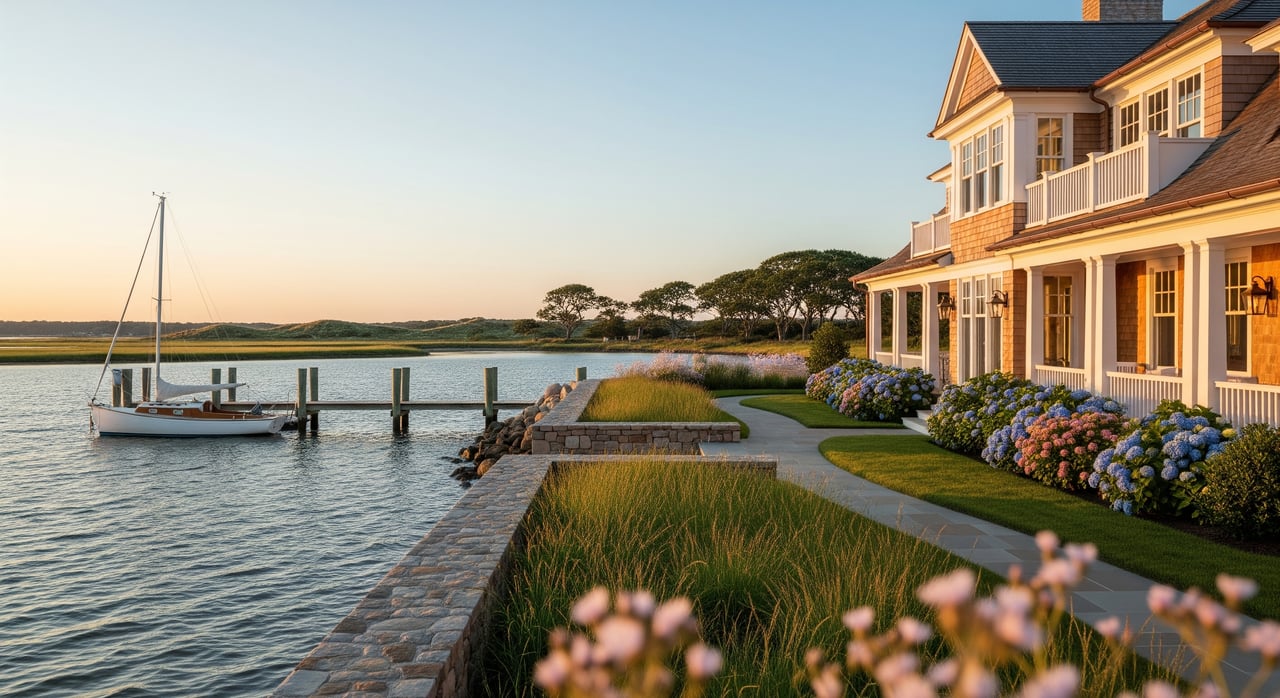
Buying on the water in Rowayton or greater Norwalk can feel straightforward until you look past the view. A dock, a mooring, or a recorded path to the shore may seem to promise easy access, but waterfront rights in Connecticut are highly site-specific and closely regulated. If you are considering a coastal property, understanding what is actually permitted can protect both your lifestyle plans and your investment. Let’s dive in.
Waterfront Rights Start With the Parcel
In Connecticut, owning waterfront land does not mean you own everything beyond it. The state explains that private ownership generally ends at the mean high water line, while submerged lands and waters beyond that line are held in public trust for public use, as outlined in the Connecticut residential dock guidelines.
That distinction matters because a coastal owner may have a regulated littoral or riparian right of access to navigable water, but that right is still subject to state oversight. In practical terms, you may have access rights without having an automatic right to install the exact dock, ramp, or float you want.
For buyers in Rowayton, Shorehaven, and other Norwalk waterfront areas, the real question is not just whether a property touches the water. The more important question is whether the specific parcel conditions and recorded rights support the docking or mooring use you have in mind.
Deeded Access Is Not the Same as Dock Rights
One of the most common buyer assumptions is that a deeded beach right, shoreline path, or access easement automatically carries dock rights with it. Under Connecticut guidance, that is not the case. The state specifically notes that easements do not create new littoral rights.
That means a recorded right to cross land to the shore can be valuable, but it should not be treated as proof that you can add a new dock or claim separate waterfront construction rights. If a property relies on an easement or association arrangement rather than direct waterfront ownership, that detail deserves close review before you make an offer.
This is also why neighboring properties can have very different outcomes. Two homes on the same stretch of shoreline may look similar from the street, yet their legal rights and permitting options can be very different based on deed language, shoreline geometry, and environmental constraints.
An Existing Dock Does Not Guarantee Future Approval
Buyers often look at a nearby dock and assume it sets the standard for the area. Connecticut DEEP says that is not a reliable guide because older docks may have been approved under earlier standards, and current review focuses on minimizing encroachment, environmental impacts, and navigation conflicts.
It is also important to know that existing structures are not automatically grandfathered. DEEP states that only a very narrow category of docks built before June 24, 1939 and continuously maintained and serviceable since then may qualify.
If a seller says a dock is "grandfathered," you should ask for the actual permit history and supporting records. That documentation matters far more than casual assurances or neighborhood comparisons.
Dock Permits Depend on Site Conditions
In tidal, coastal, and navigable waters, residential docks are regulated by Connecticut DEEP’s Land and Water Resources Division. Depending on the property, a new dock may require an individual permit, a combined permit involving tidal wetlands, or a general permit registration under the state’s coastal permitting framework.
DEEP recommends a pre-application meeting before filing. That is smart advice for buyers because it can help identify issues early, before you invest heavily in plans or close on a property based on assumptions.
Typical Dock Standards Buyers Should Know
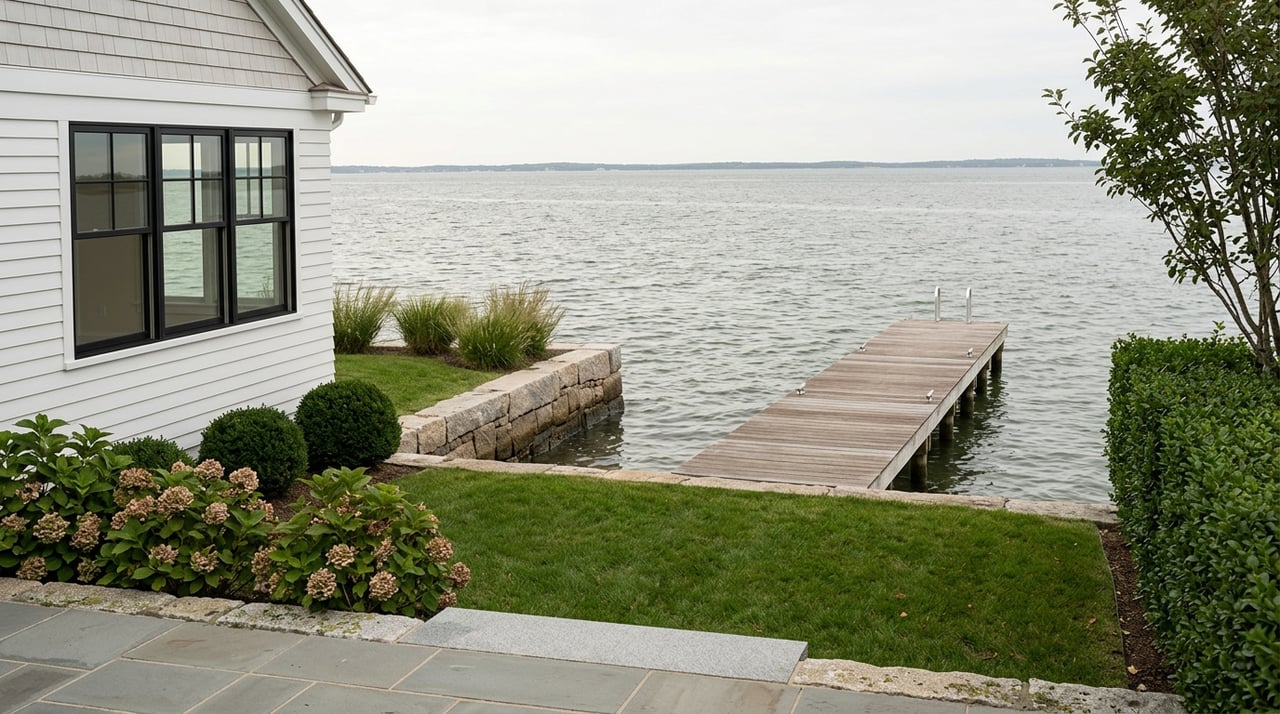
Connecticut’s guidance says a reasonable-access dock is often a four-foot-wide fixed pier extending to mean low water, plus a gangway or ramp and a 100-square-foot float. Under the state’s minor coastal structures general permit fact sheet, a general-permit dock is limited to no more than 220 square feet waterward of mean high water and can extend no farther than -4 feet mean low water or 40 feet from mean high water, whichever is shorter.
Those figures are useful benchmarks, but they are not promises. A site with tidal wetlands, submerged aquatic vegetation, shellfish leases, or navigation conflicts may require a more complex review, and DEEP notes that some locations are simply not appropriate for any dock structure.
Why Rowayton Buyers Need a Parcel Review
In Rowayton and nearby waterfront sections of Norwalk, parcel-specific review is essential. Shoreline shape, mean high water location, nearby wetlands, and local harbor conditions can all affect whether a dock is realistic.
Before moving forward, it is wise to confirm whether the site is near shellfish lease areas, tidal wetlands, or navigation corridors. DEEP specifically advises applicants to check local harbor management plans and nearby shellfish lease areas before submitting an application.
Moorings in Norwalk Harbor Follow Local Rules
A mooring can be just as important as a dock for a waterfront buyer, and in Norwalk Harbor, local rules matter. The city’s Harbor Management Commission and Harbor Management Plan govern mooring practices, and the current harbor rules state that the Harbor Master assigns a specific mooring location.
No mooring tackle may be placed until that location is approved. The rules also say the mooring cannot interfere with navigation channels or fairways, and annual tackle inspection is required.
Norwalk also maintains mooring lists with application dates and vessel size, and those lists are available for public inspection through City Hall and the city’s adopted mooring rules. If a property is being marketed with a mooring benefit, you should verify whether an assigned location actually exists and how it is documented.
Harbor Moorings vs. Non-Harbor Moorings
Connecticut’s general permit rules distinguish between harbor moorings and non-harbor moorings. For harbor moorings, approval by the harbormaster comes first, and where applicable, the mooring must be consistent with an approved harbor management plan, according to the state’s general permit language.
Even non-harbor moorings still cannot be placed in navigation channels or over submerged aquatic vegetation. So while a mooring may sound simpler than a dock, it is still a regulated use that should be confirmed with the proper authorities.
Flood Zones Can Affect Waterfront Value
For many Norwalk waterfront purchases, dock and mooring questions are only part of the picture. Flood-zone status can also shape renovation cost, permitting timelines, and ongoing ownership expenses.
Norwalk’s flood-hazard guidance states that any area in the city can flood, but properties in Special Flood Hazard Zones require closer review of FEMA mapping, base flood elevation, and local flood rules. The city also notes that finished living space must be built at least two feet above base flood elevation.
Properties in these zones may need flood vents or breakaway walls, flood-resistant materials, and added documentation before work can be approved. Proposed and final flood certifications may also need to come from licensed professionals, depending on the scope of the work.
Renovation Plans Need Extra Caution
If you are buying a waterfront home with plans to renovate, Norwalk’s rules on cumulative improvements deserve attention. The city tracks substantial-improvement costs over a five-year period, and if cumulative work reaches 25% of the structure’s market value, the building may need to be brought into flood compliance before more work can proceed.
That can materially affect the true cost of upgrading a coastal property. A home that seems like a straightforward cosmetic project may carry broader compliance obligations once flood-zone rules are applied.
Flood insurance should also be reviewed early. FEMA states that most homeowners insurance does not cover flood damage, and federally regulated lenders require flood insurance for buildings in Special Flood Hazard Areas in NFIP communities.
Your Waterfront Due Diligence Checklist
Before you move ahead with a Rowayton or Norwalk waterfront purchase, it helps to verify the basics in an organized way.
Ask These Questions Early
- Is there a current dock, shoreline, or mooring permit on file?
- Was the dock approved by DEEP through a registration, certificate of permission, or individual permit?
- Is any claimed water access tied directly to the lot, or only to an easement or association arrangement?
- Has the Harbor Master assigned a specific mooring location?
- Are tidal wetlands, submerged aquatic vegetation, shellfish leases, or navigation channels nearby?
- Is the home located in a Special Flood Hazard Area?
- Do the seller’s records include an elevation certificate or flood-related documentation?
Check the Right Public Records
A few public resources can help you verify key facts before you commit:
- Norwalk land records for deeds, maps, and recorded rights
- Norwalk GIS mapping for advisory parcel and wetlands information
- FEMA’s Flood Map Service Center for flood-zone lookup
- Norwalk Planning & Zoning resources for coastal and zoning review context
- Connecticut DEEP’s residential dock guidelines for state dock standards and permit considerations
Because Norwalk notes that GIS maps are advisory, you should treat them as a starting point rather than a final answer. Official records and site-specific professional review carry more weight.
The Right Professionals Can Save Time
With waterfront property, small details can have large consequences. Bringing in the right professionals early can help you avoid missteps.
A Connecticut-licensed land surveyor can help with shoreline surveys, easement mapping, and elevation-related documentation. A licensed engineer or architect may be needed if flood certifications or compliance work are part of the picture.
You may also want a Connecticut real estate or title attorney to review deed language, easements, and association documents. For practical, site-specific questions, contacting the Harbor Master, Norwalk Planning & Zoning, and DEEP before contract deadlines can provide valuable clarity.
Why This Matters for Waterfront Buyers
A waterfront property’s value is not defined by frontage or views alone. In Rowayton and Norwalk, value is also shaped by whether the parcel has legally usable access rights, whether a dock or mooring is realistically approvable, and whether flood-zone compliance could affect future costs.
That is why careful review matters so much. When you understand the rules before you buy, you can make a more confident decision and avoid expensive surprises later.
If you are considering a waterfront purchase in Fairfield County and want measured, informed guidance through the process, Emily Gordon offers experienced, high-touch representation tailored to complex coastal properties.
FAQs
What do waterfront rights mean for a Norwalk buyer?
- Waterfront rights in Norwalk may include regulated access to navigable water, but private ownership generally ends at the mean high water line and any dock or mooring use remains subject to state and local approval.
Does a deeded access easement in Rowayton include dock rights?
- No. Connecticut states that easements do not create new littoral rights, so a deeded access path or beach right does not automatically allow a new dock.
Can you assume an existing Norwalk dock is grandfathered?
- No. Connecticut says only a very limited class of docks built before June 24, 1939 and continuously maintained and serviceable since then may qualify.
How are moorings assigned in Norwalk Harbor?
- Norwalk’s rules say the Harbor Master assigns a specific mooring location, and no tackle may be placed until that location is approved.
Why should flood zones matter to a Rowayton waterfront buyer?
- Flood-zone status can affect renovation approvals, required construction standards, elevation documentation, insurance needs, and total ownership cost.