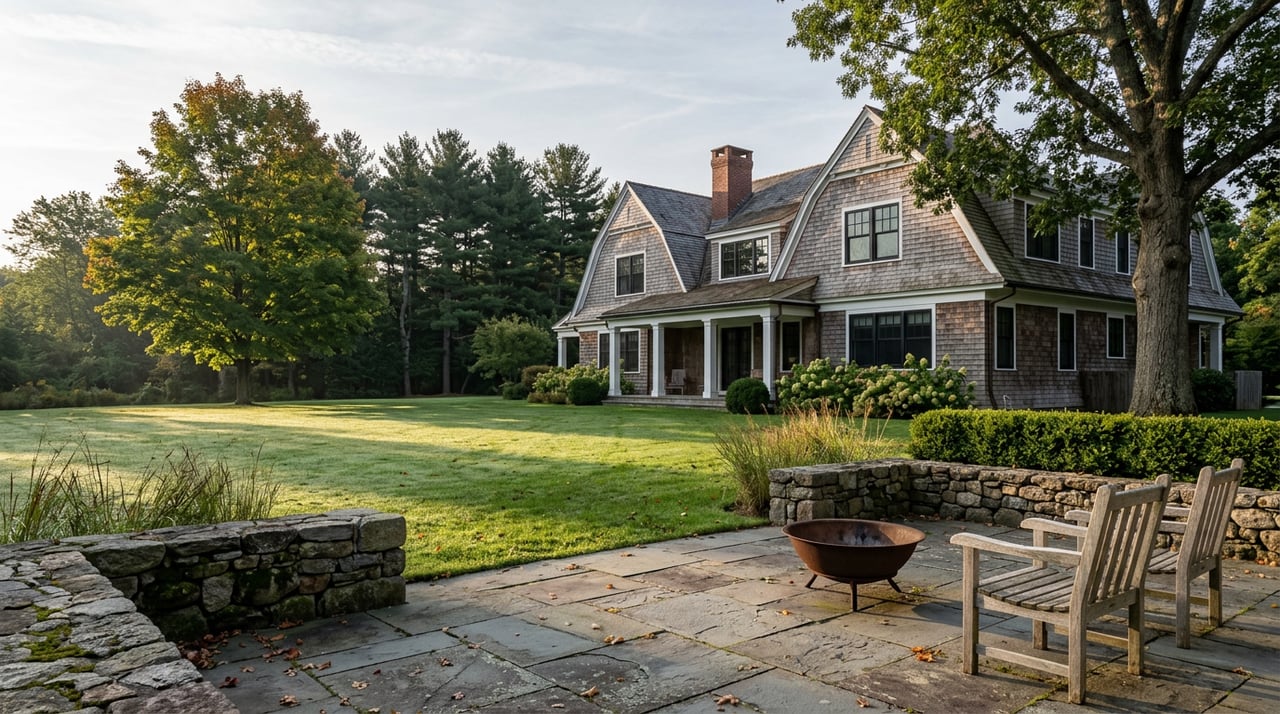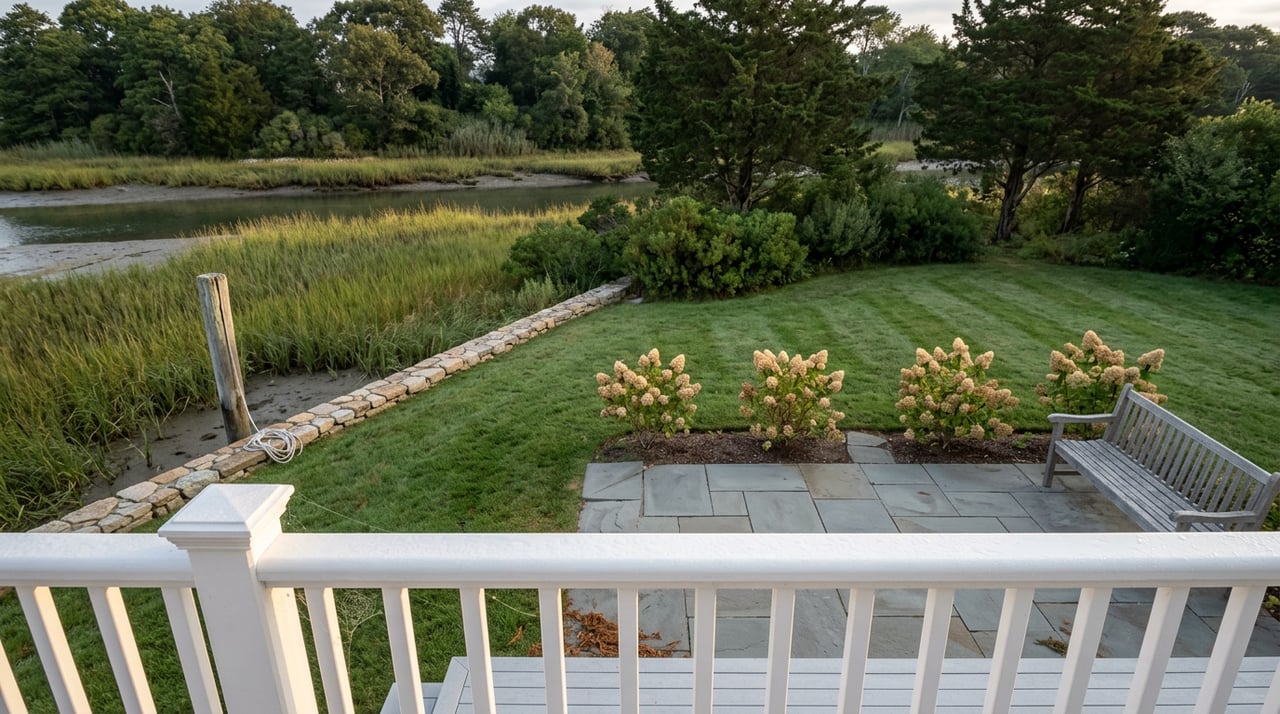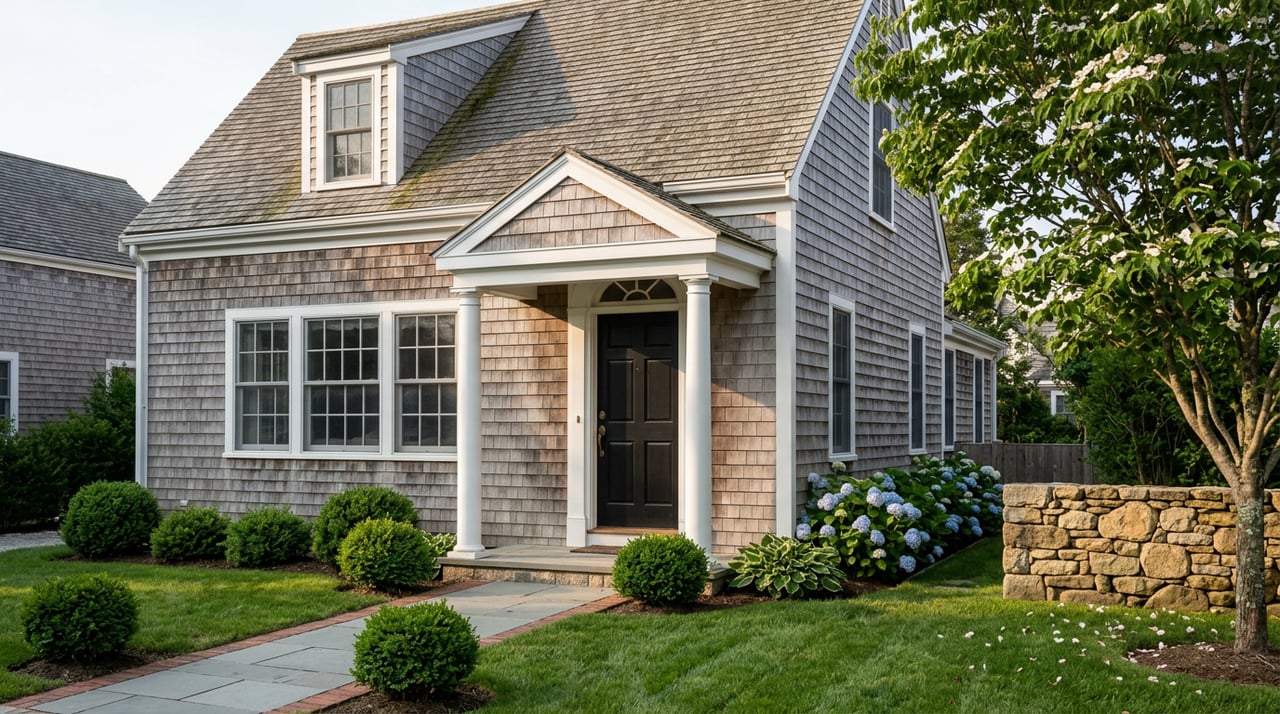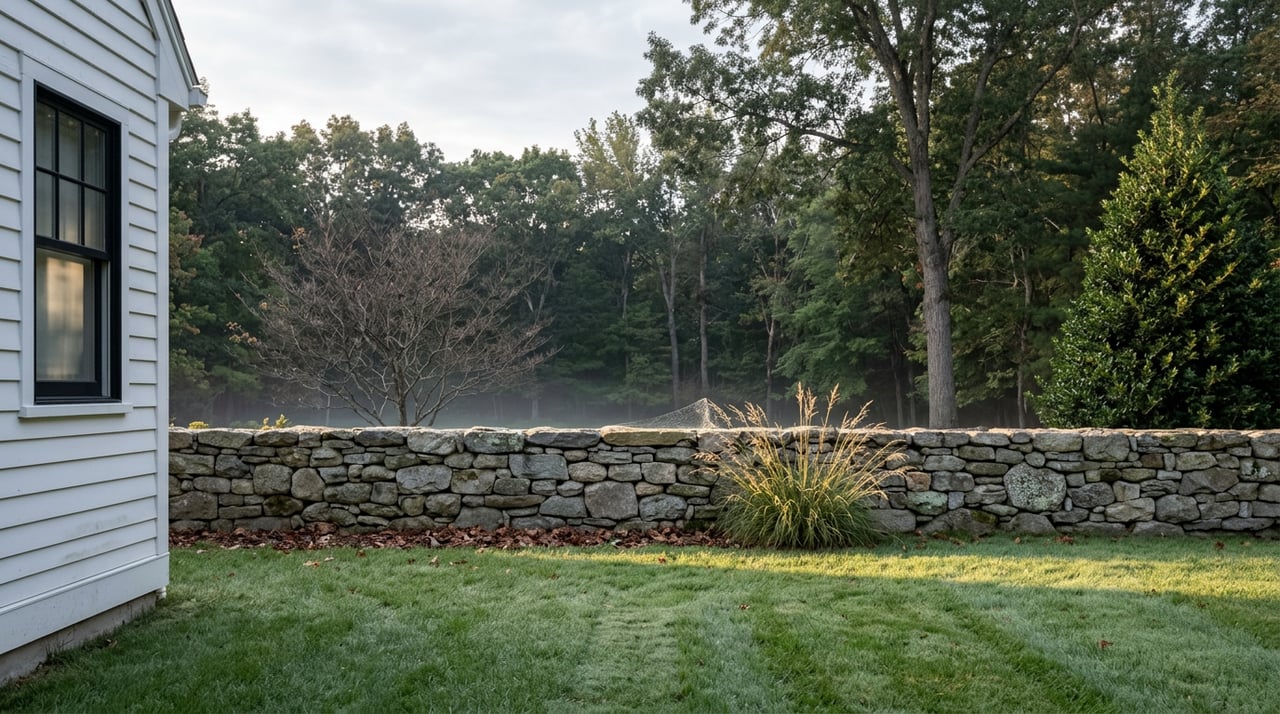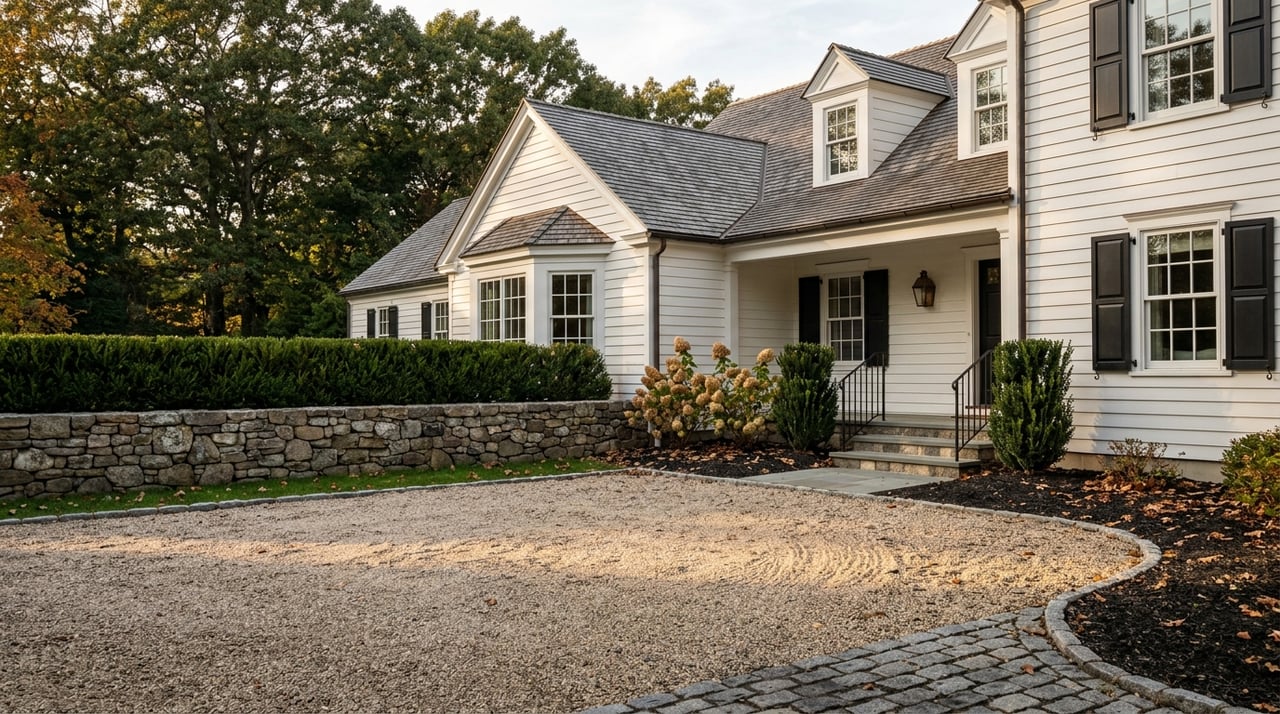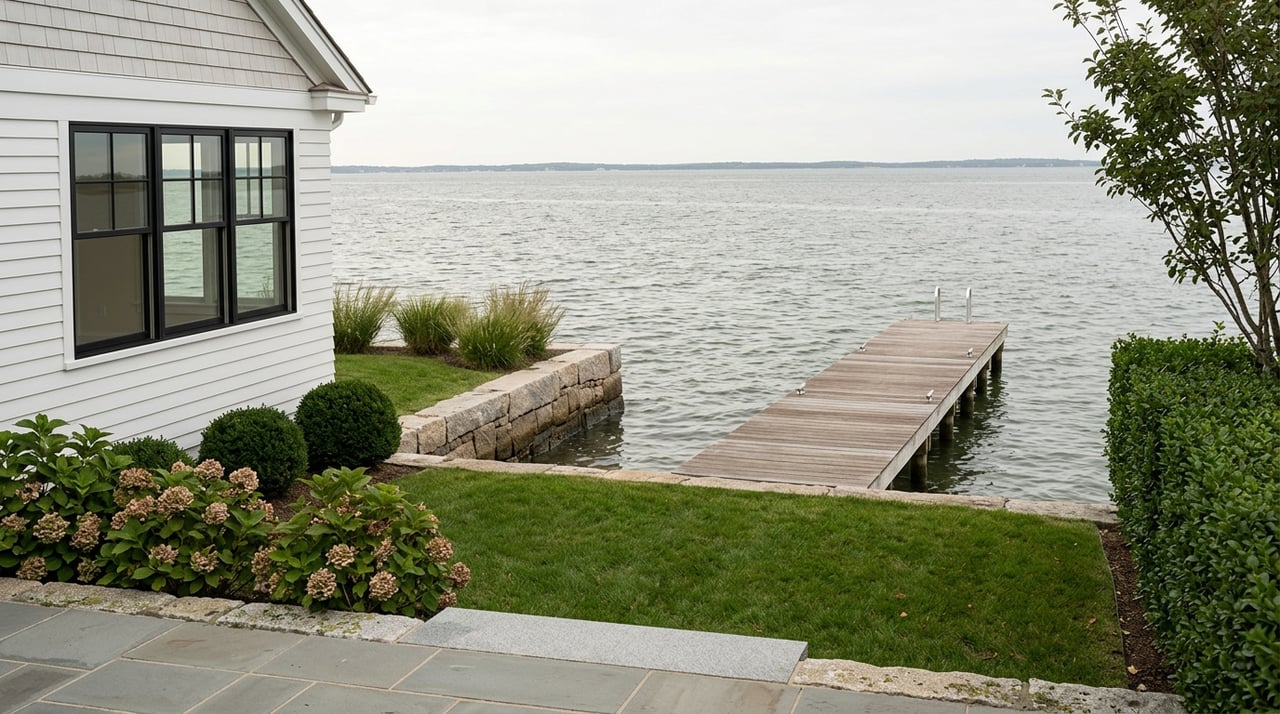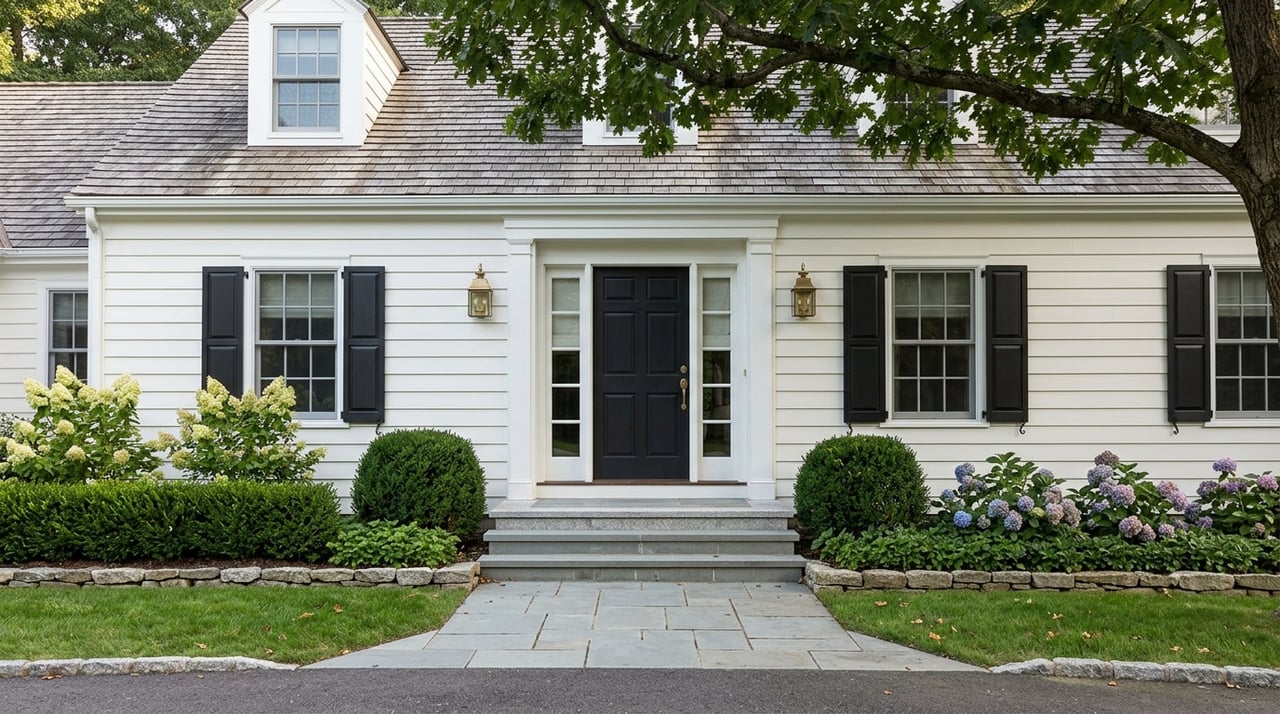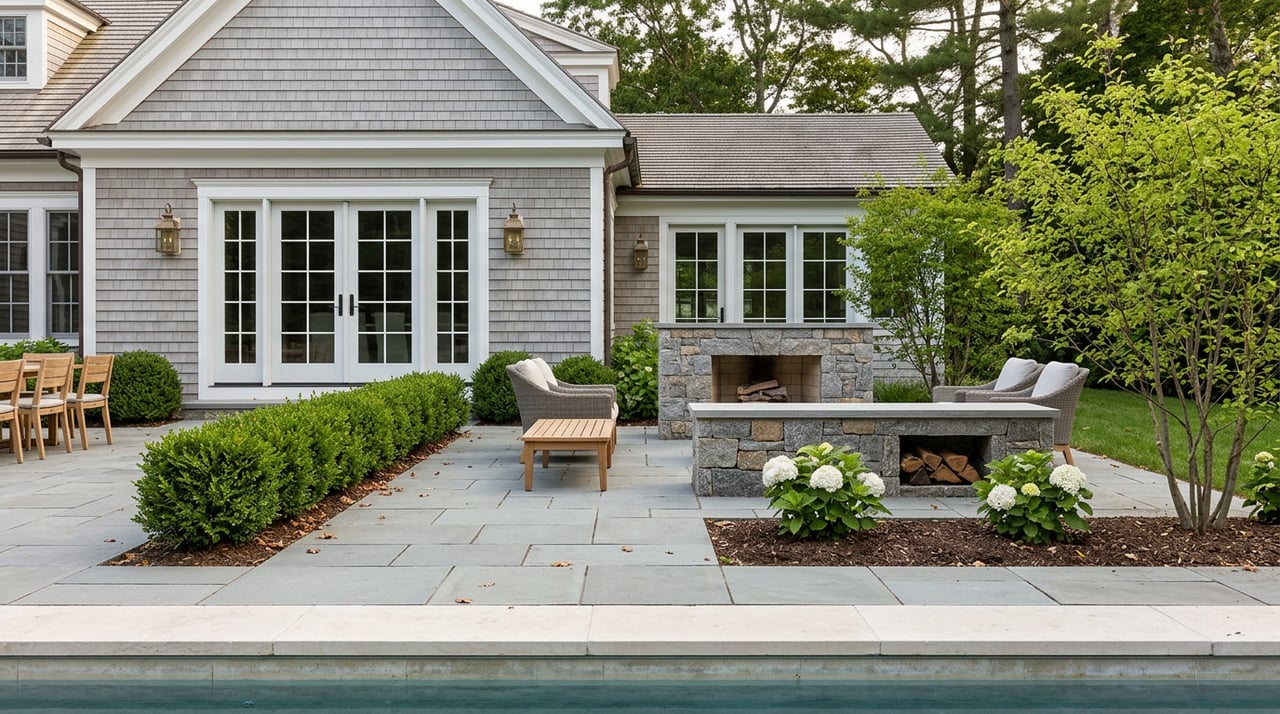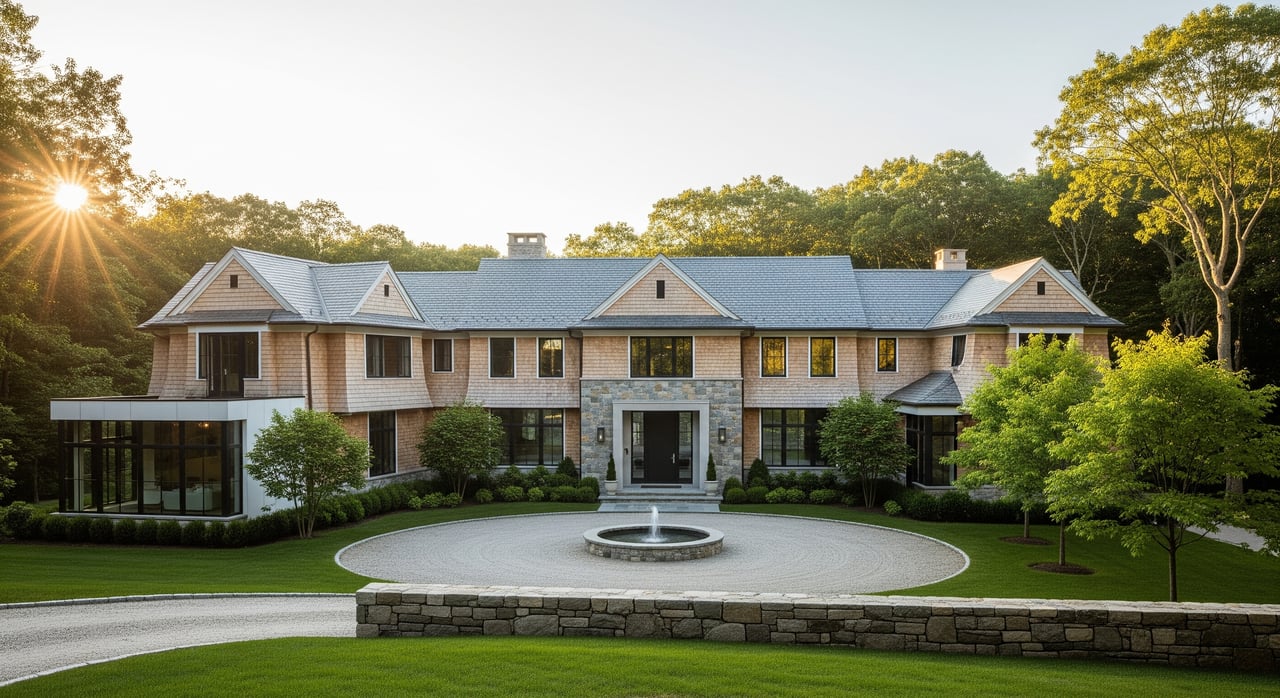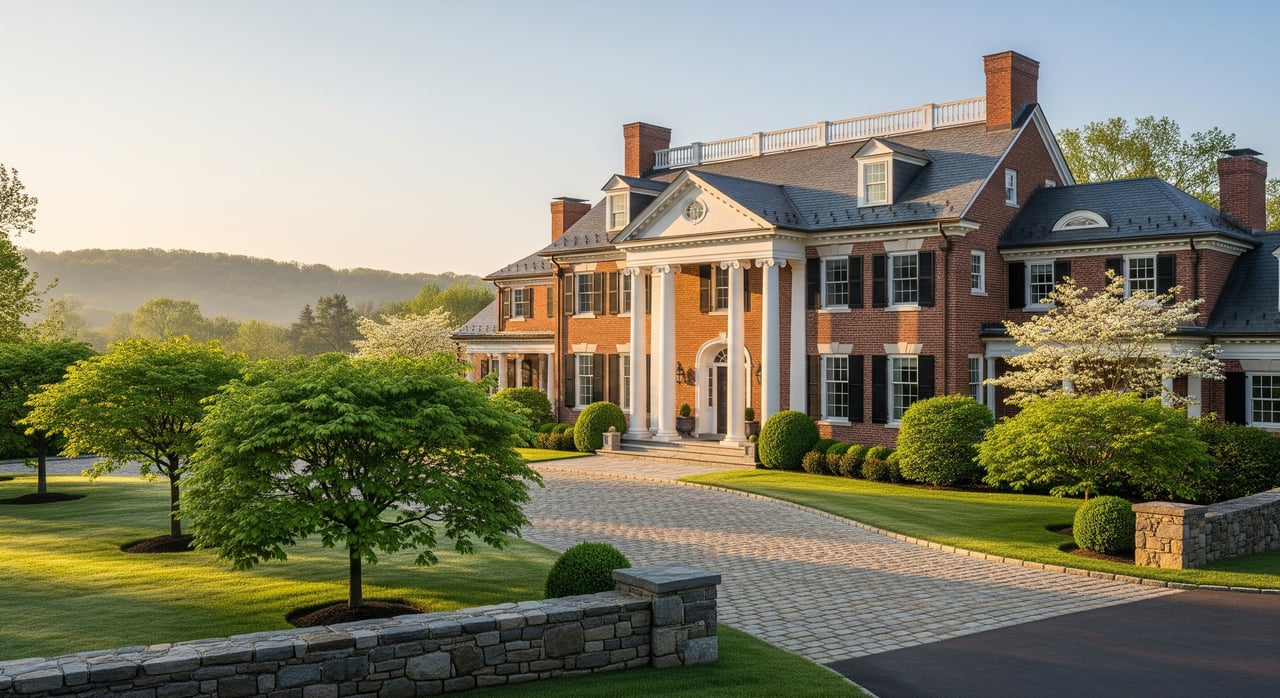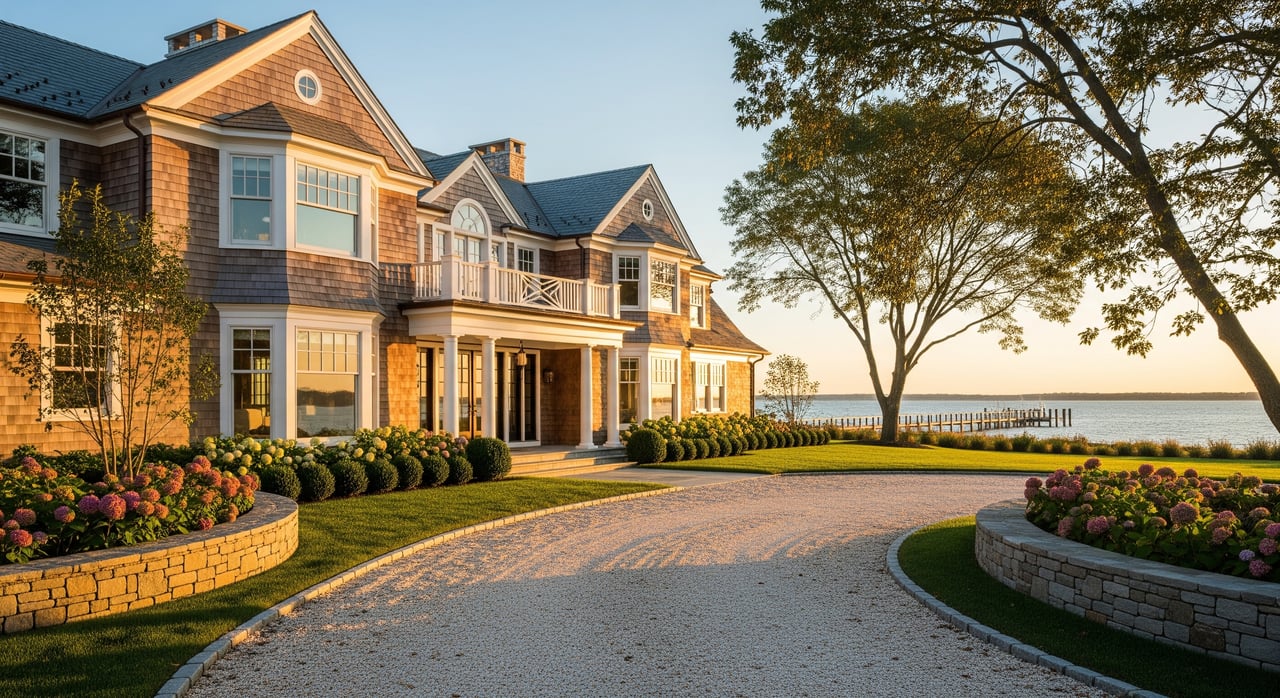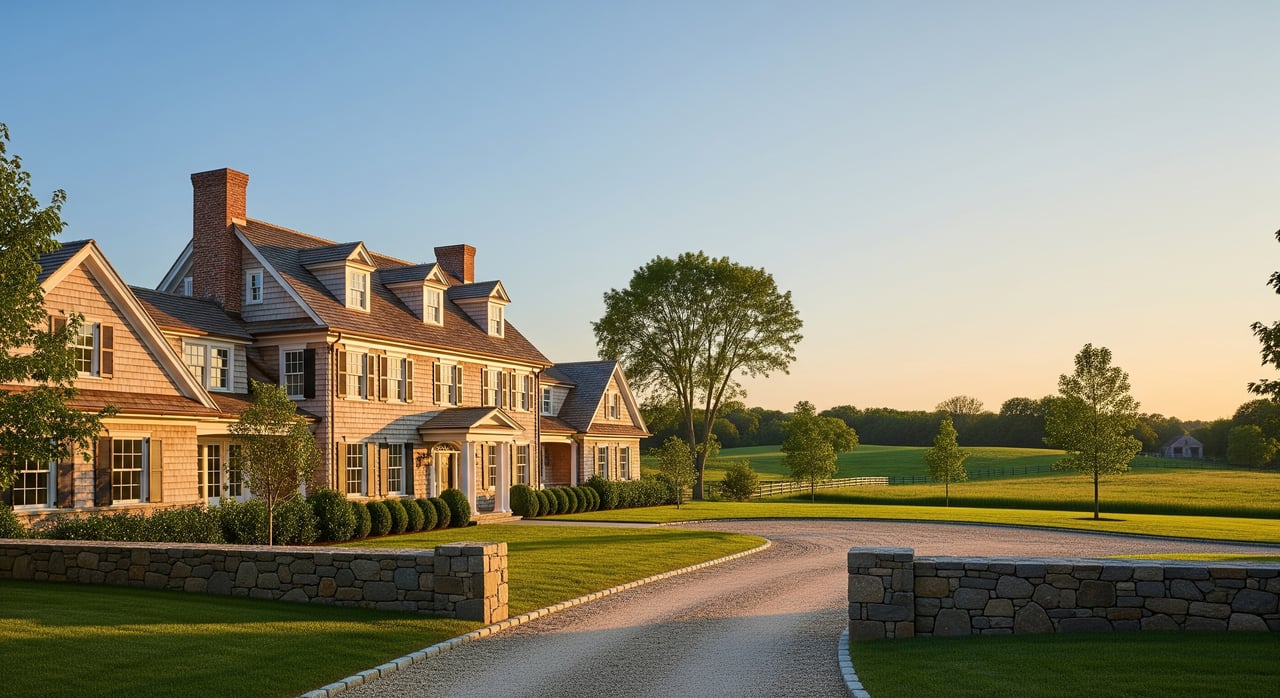
A buyer touring a Weston listing this summer will hear the word "acreage" more than any other. What they will not hear, unless they ask, is that the two acres printed on the MLS sheet are not necessarily two acres they can build on. Weston's R-2A district requires that a 170-foot by 200-foot rectangle fit inside the lot, that the frontage on a public road reach at least 170 feet, and that if a road, a major watercourse, or a restrictive easement crosses the parcel, the buildable side must still contain two contiguous acres on its own. The Saugatuck River, the Aspetuck River, the West Branch of the Saugatuck, and any nonseasonal tributary wider than two feet all count as "major" for the purpose of that rule.
That is the mechanism behind almost every headline number in the 2026 market. Once a reader understands it, the portal medians stop looking like a story about softness and start looking like a story about composition.
The Number That Looks Like a Correction
The Q1 2026 closing data for Weston shows a median sale price of $1,125,833, down 17.4% year over year, with days on market climbing from 52 to 77 and the sale-to-list ratio slipping from 103.9% to 100.7%. Read cold, those figures suggest a market that gave back ground. Read against the bracket-level detail, they suggest something else.
| Q1 2026 vs Q1 2025 | $500K to $1M | $1M to $2M | Total closings |
|---|---|---|---|
| Q1 2025 closings | 4 | 17 | 26 |
| Q1 2026 closings | 6 | 5 | 13 |
Half the volume, and the half that disappeared was concentrated at the top of the middle band. When five homes close between $1M and $2M instead of seventeen, the median is going to fall regardless of what any individual property did on price per square foot, which itself moved only 2.2% lower to $362. Inventory stayed tight at 1.5 months of supply. Lower Weston's full-year 2025 result, 84 closings at a $1.6M median with 36 average days on market and a 103.5% sale-to-list ratio, is the more honest baseline.
The buyer takeaway is not that Weston prices fell. It is that fewer of the mid-band houses transacted, and the ones that did closed at ask.
Why the Rule Explains the Bracket Shift
The $1M to $2M bracket in Weston is where the two-acre rule does its most consequential work. Below $1M, a buyer is usually purchasing an older, smaller house on a parcel that was grandfathered or subdivided before the current dimensional standards tightened. Above $2M, the buyer is typically paying for a level, dry, conforming site with a modern house already built on it. The middle band is where the friction lives: houses on parcels that look adequate on paper but whose buildable envelope has been quietly narrowed by wetlands buffers, ledge, a stream that qualifies as a major watercourse, or a septic reserve area sized to a specific bedroom count.
That friction shows up in the transaction. Buyers in this band tend to be renovation-minded, and their diligence period stretches to accommodate a boundary survey with topography, a wetlands delineation, and often a perc test coordinated with the Westport-Weston Health District. When rates moved and the pool of buyers willing to underwrite that kind of uncertainty thinned, this was the bracket that thinned with it. Sellers who priced for a 2024 market found their houses sitting. Sellers who priced to the current pool found buyers, sometimes above ask.
The Days-On-Market Discrepancy Is Itself the Point
Different sources report meaningfully different figures for how long a Weston home sits before it sells. Charlie Vinci's Q1 2026 report puts it at 77 days. The Engel Team's early-2026 read puts it at 110. Movoto's July 2026 listing snapshot puts it at 27 days for active inventory, and Homes.com reports 66 days on a rolling basis. A reader trying to reconcile those numbers will get nowhere by averaging them.
The correct interpretation is that Weston's transaction volume is small enough that any one quarter's average is dominated by a handful of outliers. A single legacy estate sitting on the market for a year pulls the mean up meaningfully. A cluster of well-priced smaller houses trading in three weeks pulls it down. The two-acre rule caps volume by capping how many parcels can ever exist. In a town where full-year 2025 activity was 84 closings, "average days on market" is a compositional measurement, not a market-temperature reading.
For a seller preparing to list, the operational number is the one buried in the full-year 2025 figures: a 103.5% sale-to-list ratio and an 86.6% odds-of-selling rate. Priced against comparable buildable envelopes rather than raw acreage, Weston houses still trade above ask.
The 60% That Cannot Be Rebuilt Into
The other half of the mechanism is what will not happen. More than 60% of Weston's total land area is permanently protected, a figure that includes The Nature Conservancy's 1,756-acre Devil's Den Preserve spanning Weston and Redding, the 150-acre Lachat Town Farm, the Saugatuck Reservoir watershed, and the properties held by the Weston Land Trust. The Aspetuck River Valley Trail threads through the balance. None of that is buildable. None of it is going to be rezoned in a meaningful timeframe.
Layered on top of the R-2A minimum, the practical effect is a town that cannot densify. The 2022 Planning and Zoning decision to allow certain detached accessory apartments under local limits, after opting out of the state default under Connecticut General Statutes Sec. 8-2o, is the most permissive move Weston has made on density in a generation, and it is bounded by owner-occupancy and design standards that keep it modest. For a buyer thinking in ten- and twenty-year holding periods, the supply side of the market is not simply tight. It is fixed.
That matters for long-run value in a way current price prints do not fully reflect. Neighboring markets compete on infrastructure and walkability. Weston competes on the certainty that the woods across the road will still be woods.
Reading Weston Against Its Neighbors
Wilton's median sits closer to $1,050,000, with more commercial infrastructure and a slightly quicker resale pace. Westport pushes well past $1,800,000 for comparable square footage, but the buyer is purchasing proximity to the Sound and a functioning downtown. Norwalk starts below $700,000 and offers the amenity density Weston has intentionally refused. Weston sits between those markets on price and above all of them on preserved land as a share of area.
The commute math shapes who chooses the middle position. Weston has no train station of its own. The nearest Metro-North options are Westport on the New Haven Line or Cannondale on the Danbury Branch, and most Weston commuters drive to one or the other, adding fifteen to twenty-five minutes to a door-to-door number that already runs 90 to 110 minutes to Midtown on a good day. That equation has always pushed Weston toward remote workers, executives who travel infrequently, and households whose office is in Stamford or Greenwich rather than Manhattan. When that population expanded after 2020, Weston prices moved with it. When it consolidated in 2025 and 2026, the mid-band closings thinned.
What This Means at the Offer Stage
Practical items to build into diligence before writing an offer on a Weston property, particularly one in the $1M to $2.5M band where the buildable envelope question matters most:
- Order a current stamped survey with topography. The recorded acreage on the deed is not the buildable acreage, and neither is what the listing photograph suggests.
- Confirm the parcel is not a split lot in the code's sense. If the Saugatuck, the Aspetuck, the West Branch, or any nonseasonal tributary wider than two feet runs through it, the two contiguous buildable acres must sit on one side.
- Pull the septic file. Bedroom count, pool siting, and future addition potential are usually governed by septic capacity, not by dimensional zoning, and the reserve area is often the binding constraint.
- Search the land records for conservation easements and rights of way held by the Weston Land Trust or by prior owners. These override acreage.
- Ask the Inland Wetlands and Watercourses Commission whether the parcel carries any regulated buffers. A wetlands buffer can extend well past the mapped edge of the wetland.
Sellers benefit from doing the same work in reverse. A listing that arrives with a current survey, a wetlands delineation, and a clean septic record removes the diligence risk that thinned the mid-band buyer pool this year. In a market where 100.7% of ask is the current ratio, removing friction is where the last few points of price live.
A Short FAQ
Is Weston's zoning going to change under state pressure? Connecticut has moved in the direction of loosening local density controls, and the 2022 detached-ADU allowance is Weston's calibrated response. The R-2A minimum itself is not on the table in any current proceeding. Buyers underwriting a Weston purchase can reasonably assume the dimensional standards will hold across a typical holding period.
Does the 170-by-200 rectangle rule ever come up in a resale? On conforming lots built in the last thirty years, rarely. On antique properties, teardowns, and any parcel being considered for a substantial addition or a pool, it comes up often, and it is one of the more common reasons a design concept has to be revised after a survey.
Why do days-on-market numbers vary so much across sources? Small transaction volume. A town with 84 full-year closings will produce quarterly averages that swing meaningfully on two or three outlier listings. The sale-to-list ratio is the steadier signal.
For a buyer or seller working through what a specific Weston parcel actually allows, and what the current pool of buyers will underwrite, Emily Gordon reads these properties for a living. Let's Connect.